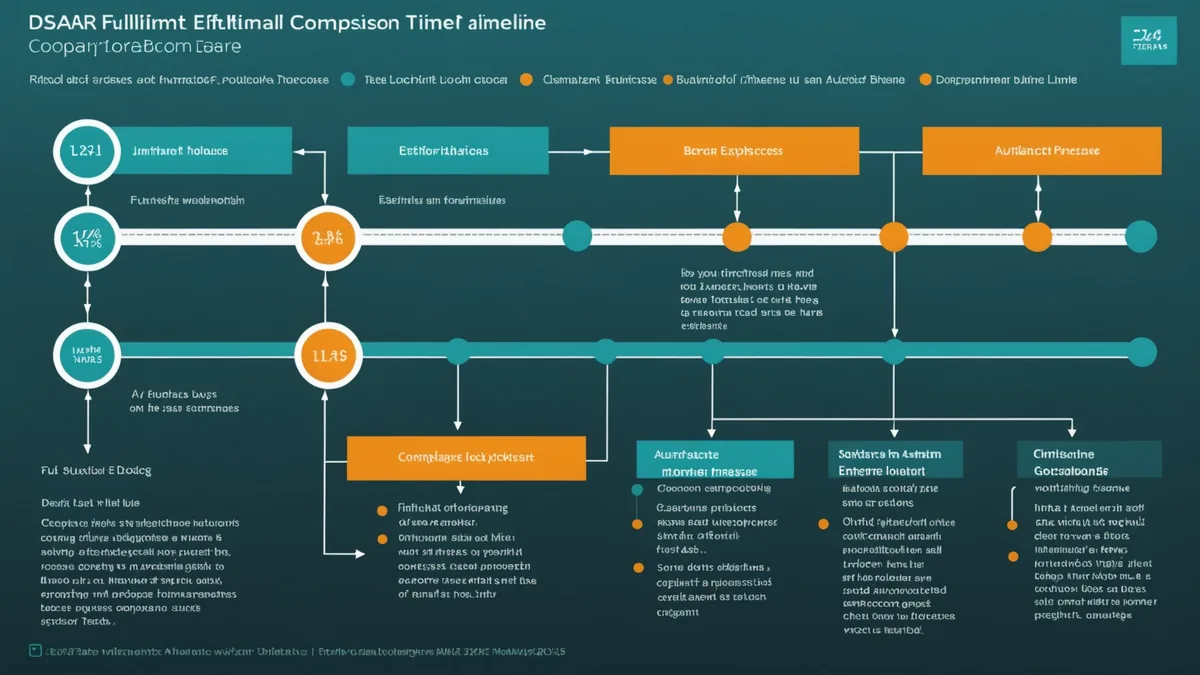
The average DSAR response time across European organisations is 18 days. The regulatory deadline is 30 days. That 12-day margin sounds comfortable until you examine what fills those 18 days: manually querying multiple systems, exporting spreadsheets, consolidating records into a coherent response, reviewing for exempt categories, and assembling the final package. Each of those steps is sequential, manual, and error-prone. The margin is not 12 days; it is the gap between adequate preparation and the risk of a missed deadline with regulatory consequences.
This article examines what automated DSAR response actually requires, how the subject lookup pattern works in practice, and what the compliance record needs to capture for both access and erasure requests.
Why manual DSAR response takes so long
The core problem is the absence of a central personal data inventory. When a DSAR arrives, the privacy officer or legal team must determine: which systems might contain data for this individual; who has access credentials to each system; how to query each one for a specific data subject; and whether the combined results are complete.
For an organisation with eight data systems — a CRM, a cloud data warehouse, a marketing automation platform, a customer support tool, an analytics database, HR software, a billing system, and a document management system — this requires either coordinating with eight different system owners or maintaining direct query access to eight systems. The coordination model typically requires 10–14 days to receive results from all owners. The direct access model is faster but demands that the privacy team maintain credentials and query skills across every connected system — operationally unsustainable as the data estate grows.
The problem compounds when the data estate is undocumented or partially documented. If the privacy team's ROPA does not reflect a pipeline added six months ago, they may not know to query it at all. The DSAR response is complete relative to the documented estate — and incomplete relative to the actual one.
What automated DSAR response requires
Three preconditions must be in place before DSAR response can be meaningfully automated. The first is a classified personal data inventory: a current map of which tables and fields across all connected systems contain personal data, what category they represent, and what the processing purpose and legal basis are. Without this inventory, a DSAR system cannot know where to search.
The second precondition is a subject identifier index: a cross-system index linking personal identifiers (email addresses, customer IDs, national identification numbers, session tokens) to records across connected systems. This index is what makes the subject lookup fast — instead of querying every system independently when a DSAR arrives, the lookup runs against a pre-built index that already knows where each identifier appears.
The third precondition is a real-time query interface: the ability to trigger a subject lookup from a DSAR event and receive structured results within minutes, not days. The query interface is the operational interface for the privacy officer; the index is the infrastructure that makes it fast.
The personal data inventory is not DSAR-specific infrastructure — it is the shared foundation of the entire compliance programme: retention enforcement, breach scoping, ROPA maintenance, and DSAR response all depend on the same underlying classification graph.
The subject lookup pattern
With a classified inventory and subject identifier index in place, a DSAR becomes a subject lookup operation. The privacy officer enters an email address or other subject identifier; the system queries the index and returns a structured data map showing every record across all connected sources where that identifier appears, linked to the specific table, field, data category, retention status, and last-modified timestamp.
This lookup runs in seconds to minutes. The privacy officer reviews the results — identifying data that may be exempt from disclosure under GDPR Article 23 exemptions (data about third parties, legally privileged information, data whose disclosure would harm others) — and generates the response package from the remainder. The assembly step that previously consumed days is reduced to a review step that takes hours.
The output format matters. A well-structured DSAR response package includes: a cover summary listing data categories and sources; a detailed per-source record of all personal data found; the retention status of each record; and the legal basis for each processing activity. This format both satisfies the data subject's rights under Article 15 and provides a documented audit trail of the response process.
Handling erasure requests alongside access requests
Right-to-erasure requests under GDPR Article 17 extend the same subject lookup pattern into a deletion workflow. The subject lookup returns the same data map; the output is now a deletion instruction set rather than a disclosure package. The instruction set specifies the exact records to be deleted in each connected system, together with the retention status of each record — because not all personal data is erasable on demand. Records subject to legal holds, tax retention obligations, or active contract performance may be exempt from erasure under Article 17(3).
The instruction set model is important for audit purposes. The compliance record documents when the instruction set was generated, which records were scoped for deletion, which records were exempted and on what Article 17(3) basis, when each deletion was executed by the responsible data engineering team, and whether any deletion was blocked by a technical constraint requiring escalation. This chain of documentation satisfies the accountability principle — the organisation can demonstrate not just that a deletion was requested but that it was executed (or legitimately deferred) on a specific timeline.
Deadline management and escalation
GDPR Article 12(3) requires response to a DSAR within one month, extendable by two further months for complex or numerous requests with notice to the data subject. For organisations receiving occasional DSARs, deadline tracking is manageable manually. For those receiving 10–50 DSARs per month — a volume common for mid-market B2C or B2B organisations with active customer bases — manual deadline tracking becomes a risk factor.
Automated deadline calendaring tracks every open DSAR, the applicable deadline, and the days remaining. Escalation alerts trigger when a DSAR has been open for more than 20 days without a response package being generated — leaving ten days to complete the review. Secondary escalation at day 27 allows for emergency response if the primary alert was missed. This is not elaborate engineering; it is a straightforward calendar operation on top of the DSAR register. But without it, missed deadlines create regulatory exposure that is entirely preventable.
Volume and complexity at scale
DSAR volumes have risen steadily since GDPR enforcement began in earnest. Supervisory authority guidance in several EU member states has clarified that organisations cannot charge fees for routine DSARs, which has removed a barrier to volume. Some consumer-facing organisations in DACH have seen DSAR volumes increase 3–5x between 2018 and 2024, driven by greater public awareness and growing use of privacy rights management tools by consumer advocacy groups.
The automation case is strongest for organisations at or approaching this scale. A manual response process that works for 5 DSARs per month becomes untenable at 50. The same classification infrastructure and subject lookup capability that handles 5 DSARs handles 500 without additional headcount — the variable cost of response scales with review complexity, not with the volume of lookups.
Conclusion
DSAR automation is not a luxury feature for large enterprises. It is a natural consequence of the same continuous classification infrastructure that GDPR's accountability principle requires. Organisations that invest in a current personal data inventory as a compliance foundation get DSAR automation as an operational benefit rather than as a separate project.
Source notes
- GDPR Article 12, 15, 17 — data subject rights, response timelines, and right to erasure
- European Data Protection Board, Guidelines 01/2022 on data subject rights — Right of access (version 2.1, adopted 2023)
- Information Commissioner's Office, Right of access: Data protection guide (2023 edition) — scoping, exemptions, and response format
- CNIL (French DPA), Guide to data subject rights (2022) — erasure obligations and Article 17(3) exemptions
- Bundesdatenschutzbeauftragte (BfDI), FAQ Betroffenenrechte (2022) — German DPA interpretation of DSAR scope for indirect identifiers