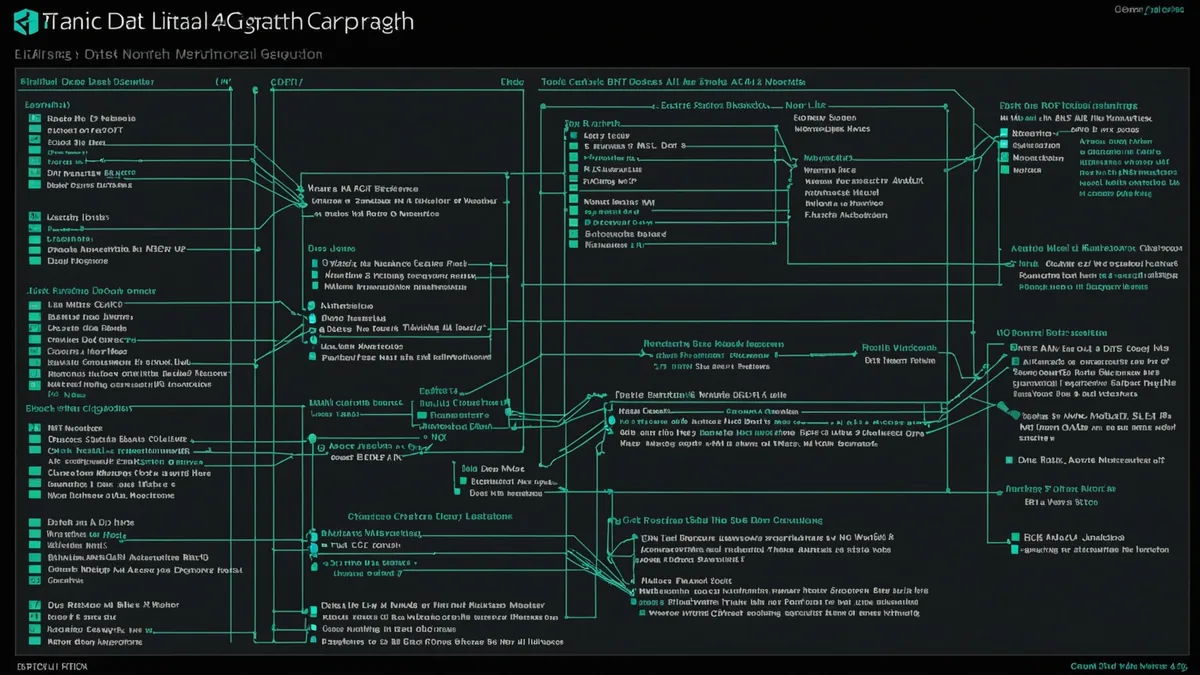
Data lineage graphs — directed acyclic graphs of Kafka topic flows, dbt model dependencies, and Snowflake schema inheritance chains — are typically built by data engineering teams for operational reasons: understanding upstream dependencies, tracing data quality issues, managing pipeline change impact. For GDPR compliance, these same lineage artifacts serve a different set of functions: proving that documented data flows are accurate, scoping breach impacts, enabling complete DSAR responses, and detecting cross-border transfers that require legal basis documentation.
Privacy observability — the ability to continuously monitor where personal data lives, how it flows, and whether policy rules are being respected — requires lineage as its structural foundation. Without it, the compliance picture is necessarily incomplete.
What data lineage means in practice for GDPR
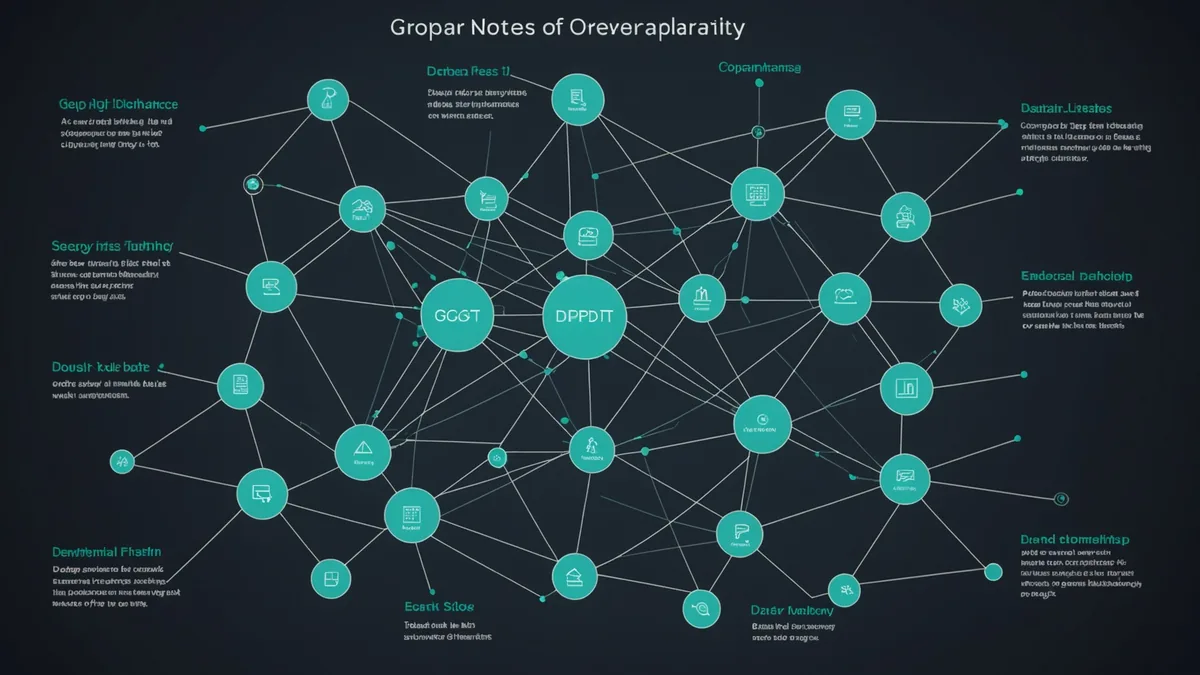
Data lineage is a directed graph: nodes represent sources, transformations, and destinations; edges represent data flows. For GDPR compliance purposes, the relevant lineage operates at the field level, not just the table or system level. Knowing that customer data flows from a CRM to a data warehouse is insufficient for compliance. The actionable question is: which specific fields flow where, and which of those fields contain personal data under Article 4(1)?
Field-level lineage requires integrating multiple metadata sources. Schema metadata from the warehouse tells you what fields exist and what data types they carry. Query and pipeline execution logs tell you which fields are read and written. dbt manifest.json artifacts tell you which upstream source columns feed into each downstream model column. Together, these create a lineage graph that traces a specific personal data field — say, an email address column — from its ingestion source through every transformation it passes through to every downstream table where a derived version lands.
This field-level lineage trace is what makes DSAR subject lookups, breach scoping, and ROPA accuracy operationally possible. A table-level lineage graph leaves too many ambiguities: does the downstream table actually contain the email address, or was it dropped in a transformation? Field-level lineage answers this precisely.
Lineage as compliance evidence for the ROPA
GDPR Article 30 requires documentation of data flows — the recipients of personal data, the categories of data transferred, the third-country transfers and safeguards applied. The ROPA is fundamentally a description of data lineage in compliance language. A lineage graph is the technical substrate from which that description is derived.
When a supervisory authority reviews the ROPA as part of an investigation or audit, they may compare documented flows against actual system behaviour. A ROPA derived from a live lineage graph — generated automatically from current metadata — matches actual system behaviour because it reflects it. A ROPA written manually 18 months ago may not. The difference between a defensible ROPA and an inadequate one is, in large part, the currency of the lineage evidence that underpins it.
An Article 30 ROPA is not a description of what an organisation intends to do with data — it is a description of what the organisation’s data infrastructure actually does. Only lineage metadata can keep those two things aligned continuously.
The currency problem: why static lineage fails
Static lineage documentation — a data flow diagram created during an audit and updated annually — cannot serve as a foundation for continuous privacy observability. Modern data infrastructure changes on a weekly cadence: new dbt models are added, Snowflake schemas are altered, SaaS integrations are connected, Kafka topics are created. Every change not reflected in the lineage graph is a potential blind spot.
Continuous lineage extraction solves this by reading metadata artifacts automatically on a configurable cadence. dbt compile runs produce a fresh manifest.json on every build; Snowflake Access History reflects every query within minutes; SaaS tool APIs expose field-level schema changes as they occur. Parsing these artifacts continuously means the lineage graph reflects current state rather than a historical snapshot.
The cadence question requires tuning per source. A warehouse used by an active engineering team may see schema changes daily; a SaaS tool in read-only integration mode may be stable for months. Continuous does not necessarily mean real-time for every source — it means the update frequency is matched to the rate of change at each source, with a maximum staleness threshold appropriate to the compliance risk.
Cross-border transfers and automated detection
One of the highest-value compliance applications of lineage is cross-border transfer detection. GDPR Chapter V restricts transfers of personal data outside the EU/EEA unless a valid transfer mechanism is documented: an adequacy decision, Standard Contractual Clauses, Binding Corporate Rules, or another approved mechanism. The Schrems-II ruling reinforced that transfer mechanisms must be accompanied by supplementary technical measures when the legal framework of the destination country does not provide equivalent protection to GDPR.
Detecting cross-border transfers requires knowing where each destination system is physically located — information not always obvious from the system’s name or documentation. A lineage-aware compliance system annotates each destination node with geographic region based on the system’s infrastructure metadata (cloud provider region, data residency configuration, sub-processor DPA). Any personal data flow that crosses from EU/EEA to a destination node in a non-adequate country is flagged for transfer mechanism documentation review.
This turns a compliance check previously done once per year in a legal review into a continuous automated check that flags new violations within hours of a new pipeline being created. The data engineering team gets immediate feedback when a new destination in a non-covered region is added; the privacy officer gets a policy violation record to resolve before data starts flowing at scale.
Lineage for DSAR and breach scoping completeness
DSAR subject lookup completeness depends directly on lineage coverage. If the lineage graph is missing a pipeline that loads data from a SaaS CRM into a derived Snowflake mart, the DSAR system will not search that mart — and the DSAR response will be incomplete. Lineage coverage is the proxy for DSAR completeness: the more complete the lineage graph, the higher the confidence that the subject lookup has searched the full estate.
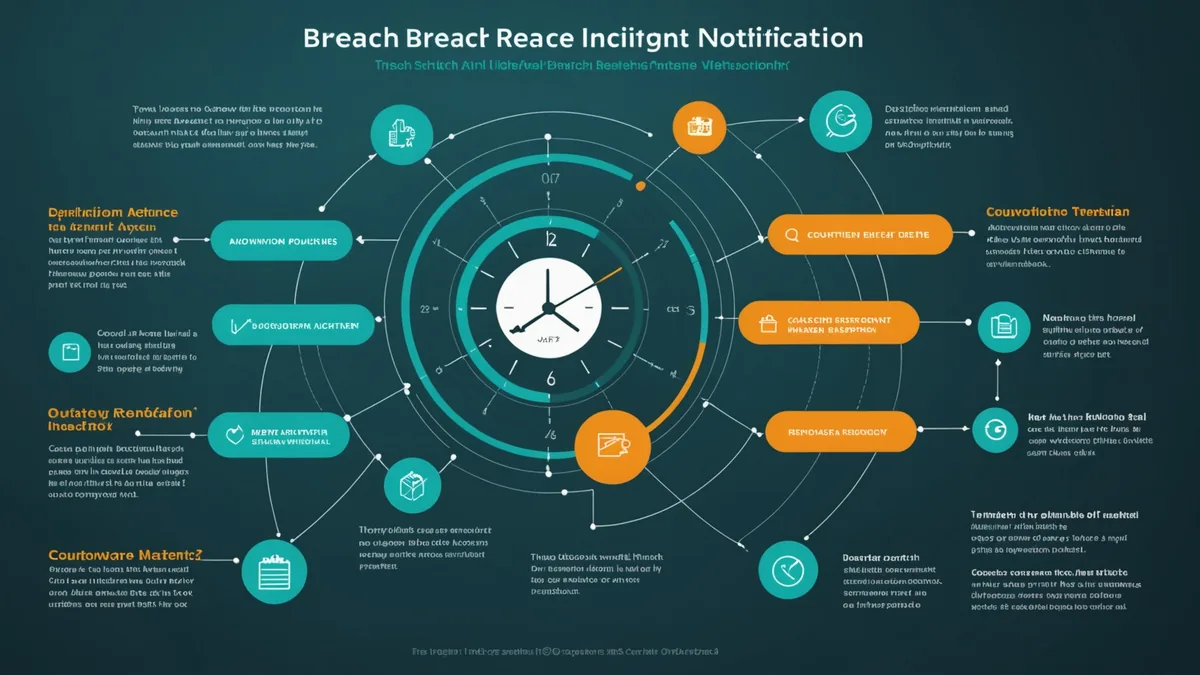
Breach scoping operates similarly. When an incident descriptor identifies an affected table, the lineage graph surfaces every downstream table that may have inherited personal data from that source, and every upstream source that may have contributed to it. This is particularly relevant for Snowflake analytic marts: a breach affecting a derived mart may trace upstream to a raw events table containing more extensive personal data than the mart itself contains, depending on what transformations were applied in between.
Building lineage incrementally
Full field-level lineage across a heterogeneous data estate is a multi-month effort for most mid-market organisations. A practical sequencing approach starts with the highest-risk lineage paths: sources that ingest Article 9 special-category data, pipelines that feed DSAR-critical systems, and data flows that cross regional boundaries. Establishing lineage coverage in these areas first yields the highest compliance return per engineering hour invested, while allowing the full estate to be covered incrementally over subsequent cycles.
Conclusion
Privacy observability without lineage is observability of current state — where personal data sits right now. Lineage adds the dimension of flow: where personal data comes from, where it goes, and what transformations it passes through. Both dimensions are necessary for GDPR accountability. The organisations that invest in field-level lineage infrastructure find that it pays returns across ROPA accuracy, DSAR completeness, breach scoping speed, and cross-border transfer detection simultaneously.
Source notes
- GDPR Articles 30, 44-49 — ROPA content requirements and cross-border transfer restrictions
- European Data Protection Board, Recommendations 01/2020 on measures that supplement transfer tools (version 2.0, adopted 2021) — Schrems-II supplementary measures and adequacy country map
- dbt Labs, dbt manifest.json schema documentation (2024) — field-level lineage extraction from nodes[].depends_on and columns metadata
- ENISA, Technical guidelines for the implementation of minimum security measures for Digital Service Providers (2017) — data flow documentation and audit trail requirements
- CNIL, Guide pratique de la sécurité des données personnelles (2023 edition) — technical architecture guidance for lineage and observability controls