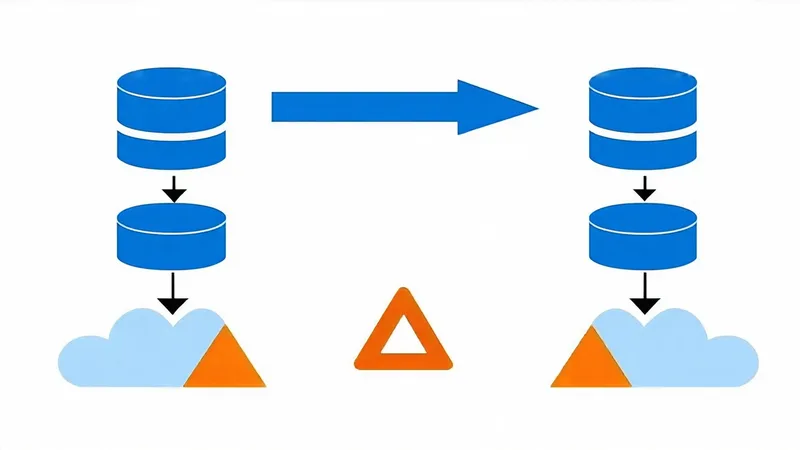
Schema drift is a familiar problem to anyone who has operated a data pipeline for more than a few months. A column type changes — from varchar(255) to text, or from a nullable integer to a required UUID. A new field appears in an upstream API response and starts populating a table column that was not in the original data contract. A table is renamed, or a join key is changed to accommodate a new identifier scheme.
In operational terms, schema drift causes pipeline failures, broken dashboards, and incorrect aggregations. The data engineering playbook for handling it involves schema registries, change data capture alerts, and contract testing between upstream producers and downstream consumers. That playbook is well-established.
What is less well-understood is that schema drift has a direct compliance dimension. A field that begins capturing personal data creates a processing activity. A field that changes from an anonymised identifier to a linkable one changes the classification of data in that table. A column that goes from holding a non-sensitive attribute to holding a health indicator creates a special category data processing obligation under Art. 9. None of these changes are visible to a compliance team that has no connection to the engineering layer.
The Specific Compliance Failures Schema Drift Creates
Undocumented processing activities
Under Art. 30 GDPR, the ROPA must document all processing activities. A processing activity that begins as a result of a schema change — a new field added to capture user location for fraud prevention purposes, for instance — is a new processing activity that requires a legal basis, a ROPA entry, and possibly a DPIA if the risk profile warrants one. If no one alerted the DPO that the field was added, none of those obligations are met.
This is not a hypothetical failure mode. Consider a growing eCommerce company that migrated their checkout flow to a new payments processor in 2025. The migration included a new webhook payload format that added a device fingerprint field to the order record. The field was logged as-is to the order history table. Nobody flagged it as a new personal data field — because to the engineer implementing it, it was just part of the payments API response. The DPO, reviewing the ROPA twelve months later, discovered a column holding potentially identifying device data with no documented lawful basis, no retention rule, and no mention in the privacy notice.
Incorrect DPIA scope
A Data Protection Impact Assessment is scoped against a specific description of the processing: what data, what systems, what risk to data subjects. If the data model changes after the DPIA is completed — a new field adding direct identifiers to what was previously pseudonymous data, a change in data granularity that increases re-identification risk — the DPIA is no longer accurate. Art. 35(11) requires controllers to review DPIAs when the processing changes in a way that is likely to result in a high risk.
Schema drift that changes the risk profile of a dataset is exactly that kind of change. An observability alert on schema modification events for tables covered by a DPIA is, from a compliance standpoint, a DPIA maintenance mechanism.
Art. 5 accuracy and data minimisation failures
The data minimisation principle (Art. 5(1)(c)) requires that personal data be adequate, relevant, and limited to what is necessary for the processing purpose. A field that was added during an engineering sprint without a corresponding purpose definition is, almost by definition, not limited to what is necessary — because no purpose was defined. Schema drift tends to accumulate excess data because fields are added when they seem useful, without the friction of a formal data minimisation review.
Why Standard Data Quality Monitoring Is Not Sufficient
Many organisations that run data quality checks focus on completeness, freshness, and referential integrity — the operational health of the pipeline. Those checks will not catch a schema change that is technically valid but compliance-relevant. A new column that populates correctly, is not null, and has consistent data types passes every standard data quality test. It only fails a compliance test.
Compliance-aware schema monitoring requires a different signal: alerts triggered by structural changes to tables that have been classified as containing personal data. The specific events to monitor are: column addition, column type changes (particularly changes that expand the scope of what the field captures), table renames, and changes to the nullability of fields that carry identifying information.
We are not saying that operational data quality monitoring is irrelevant to compliance — the accuracy principle makes it relevant. We are saying that it operates at a different layer. Schema change detection for compliance purposes needs to be tied to a data classification layer: you need to know which tables and columns hold personal data before you can determine which schema changes require compliance review.
Building the Detection Layer
The technical foundation for compliance-relevant schema monitoring is a combination of two capabilities: a data catalog or classification system that tags tables and columns containing personal data, and a schema change notification mechanism that queries that classification when a change occurs.
The classification layer does not need to be exhaustive from day one. Starting with the tables already documented in the ROPA — the systems you know hold personal data — and monitoring those for schema changes produces an immediate improvement in compliance visibility without requiring a full data estate classification project.
The notification should reach both the data engineering team (who can assess whether the change was intentional and what it does) and the DPO or compliance function (who can assess whether it has compliance implications). The routing matters: a schema change notification that only goes to engineers will be addressed operationally and rarely reviewed for compliance implications. One that also reaches the DPO creates the opportunity for a short, structured triage: is this field personal data? does it require a ROPA update? does it affect any existing DPIA?
The Longer-Term Picture
Schema drift is an engineering problem with a compliance surface. The organisations that handle it well are those that have made the connection visible — not by creating elaborate compliance review gates on every schema change, but by ensuring that the people who care about compliance can see the changes that are compliance-relevant.
Over time, that visibility changes the culture around schema changes. When engineers know that adding a column to a personal data table will trigger a compliance triage, they begin to apply a data minimisation lens at the design stage. That is privacy by design (Art. 25 GDPR) in practice — not as a documentation exercise, but as an engineering habit.
The alternative — discovering the accumulated compliance debt from two years of schema changes during a supervisory authority investigation — is both avoidable and substantially more expensive to remediate than the monitoring infrastructure that would have caught each change as it occurred.