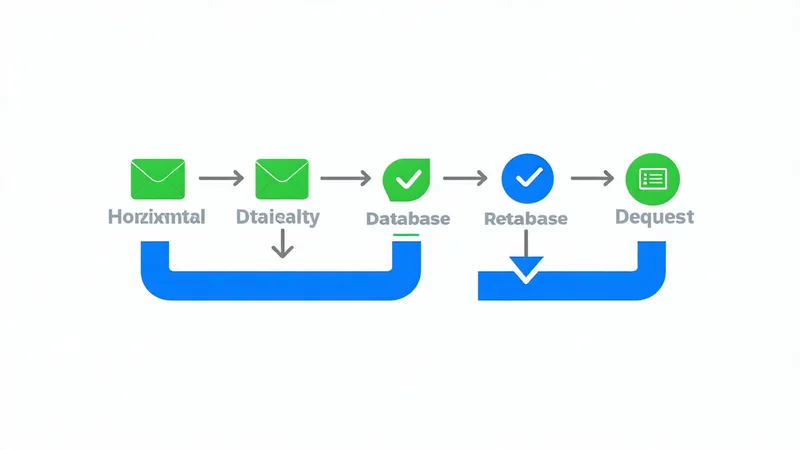
Art. 12(3) GDPR gives controllers one calendar month from receipt of a data subject request to provide the requested information or take the requested action. The period can be extended by two additional months in cases of complexity or high volume, provided the controller informs the data subject of the extension and the reasons within the first month. Subject access requests (Art. 15), erasure requests (Art. 17), rectification requests (Art. 16), restriction requests (Art. 18), portability requests (Art. 20) — all sit inside the same timeline framework.
For a company receiving five DSRs per year, a manual process is perfectly adequate. For a company receiving fifty, the accumulation of time-sensitive parallel obligations creates real operational risk. Beyond a certain volume, manual tracking through email and spreadsheets is not just inefficient — it is error-prone in ways that produce compliance failures: missed deadlines, incomplete responses, identity verification steps not documented, erasure confirmations not sent.
The case for automating DSR workflows is operational and compliance-driven. The risks of doing it badly, however, are also compliance-driven. This is the tension that makes DSR automation worth examining carefully.
What a DSR Workflow Actually Involves
Before evaluating automation approaches, it is useful to map what the workflow actually contains. A subject access request, for instance, involves: receiving the request (via web form, email, or an in-product channel), verifying the identity of the requestor (at a level proportionate to the risk of disclosure to the wrong person), routing the request to the relevant system owners for data extraction, compiling the response, conducting a quality review (to confirm completeness and to redact any third-party personal data that cannot be disclosed), sending the response within the deadline, and documenting the entire process for accountability purposes.
An erasure request adds an additional layer: confirming which systems hold the relevant data, executing deletion in each system, handling any exemptions (data required for legal obligation fulfilment, for instance), and providing confirmation of deletion to the data subject.
Each of these steps can be automated to varying degrees. The question is which automation decisions create compliance risk and which reduce it.
Where Automation Reduces Compliance Risk
Request intake and timestamping
The one-month clock starts from the date of receipt. An automated intake mechanism — a web form that timestamps the request, assigns a unique identifier, and generates a confirmation email to the requestor — eliminates ambiguity about when the clock started. It also creates an audit trail that documents receipt, which is relevant if a deadline dispute arises.
Identity verification workflows
Identity verification is one of the most frequently mishandled steps in manual DSR processes. It is sometimes skipped entirely ("they emailed from their registered address, that's enough"), sometimes applied disproportionately (asking for a passport scan for a low-risk request), and rarely documented. An automated workflow with a defined identity verification step — asking for a specific piece of account verification data, recording what was provided and when — is more consistent and more defensible than ad-hoc verification.
Deadline tracking and escalation
The most common DSR failure mode in manual processes is not a deliberate decision to miss a deadline — it is a request that was assigned to someone who went on leave, or one that fell out of a shared mailbox, or one that was waiting for a system owner to respond and the waiting was never followed up. Automated escalation at predefined intervals — seven days before deadline, three days before deadline, day of deadline — eliminates this failure mode.
Cross-system data discovery coordination
Fulfilling a subject access request requires identifying all systems that hold data about the requestor. An automated workflow that, upon request receipt, generates a structured set of lookup tasks for each system owner — with their own deadline aligned to the overall DSR deadline — is substantially more reliable than a DPO sending individual emails.
Where Automation Introduces Risk
We are not saying that full automation of DSR responses is safe. It is not, for several categories of request, and organisations that deploy automation without understanding the risk surface create new compliance problems.
Automated erasure without human review
Erasure requests are particularly dangerous to automate fully. Not all erasure requests are valid — Art. 17(3) specifies circumstances where the right to erasure does not apply, including legal obligation compliance and the establishment, exercise, or defence of legal claims. A fully automated deletion workflow that processes erasure requests without human assessment of applicable exemptions may delete data that was legally required to be retained. The liability consequences of inadvertent legal data destruction can be severe.
The appropriate automation for erasure is in the workflow coordination — routing, tracking, cross-system coordination — not in the deletion decision itself.
Automated identity verification that can be bypassed
An automated identity verification step that can be trivially satisfied — for instance, one that accepts a requestor's stated email address as verification without any account-side check — provides an audit trail without providing security. A fraudulent access request fulfilled via an automated process that documented a bypass-vulnerable identity check is still a data breach. Automation of verification steps must be designed with the actual verification logic, not just the process wrapper around it.
Automated portability responses with inadequate data compilation
Art. 20 portability requests require that data be provided in a structured, commonly used, machine-readable format. An automated export that pulls from one system but misses secondary data stores — because the automation only covers the primary CRM and not the email marketing platform that also holds personal data — produces an incomplete response. The automation creates a false sense of completeness if its scope does not match the full extent of the personal data estate.
A Practical Architecture for Growing Teams
A healthcare SaaS company based in Berlin with approximately 85 staff faced a DSR volume of roughly 30 requests per month in 2025, split between access and erasure requests. Their previous process — email-based tracking by the DPO — was producing missed acknowledgement confirmations and occasional deadline overruns. The approach they implemented had three components: a web-based intake form with automated receipt acknowledgement and timestamped case creation; an internal task-routing system that assigned lookup tasks to each system owner (four systems) with a seven-day internal deadline against the overall one-month GDPR deadline; and a human review step before any erasure was executed, documented with the reviewer's identity and the applicable exemption assessment. Full automation was restricted to intake, routing, and deadline alerting. The human review steps remained human.
The measure of a well-designed DSR automation system is not the percentage of steps that are automated — it is whether the automated components reduce error rates and deadline risk without removing the human judgement that legally sensitive decisions require.
Documentation as a Compliance Requirement
Art. 5(2) GDPR's accountability principle requires that controllers be able to demonstrate compliance. For DSRs, that means documentation of every request received, every step taken, and every decision made. An automated workflow that does not produce auditable logs — or produces logs that are overwritten after a retention period shorter than the statute of limitations for regulatory enforcement — is failing the accountability requirement even if it processes requests correctly.
Whatever automation infrastructure you deploy, the audit log requirements should be specified before the technical implementation: what events are logged, with what granularity, retained for how long, and accessible to whom in the event of an investigation. That specification is a compliance document, not an afterthought.