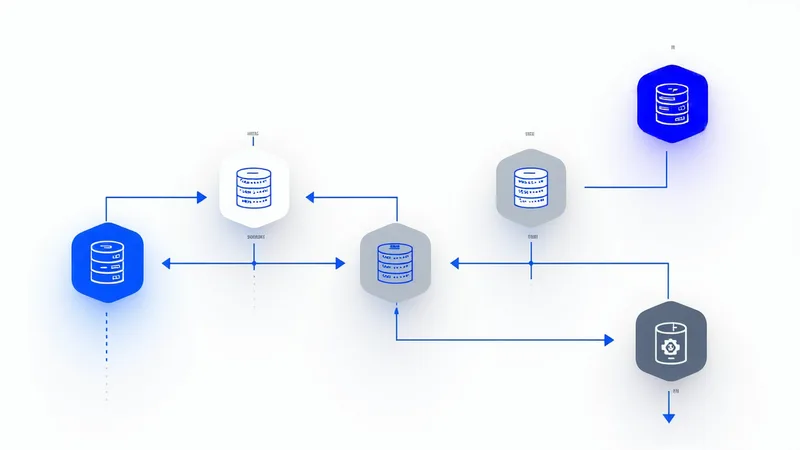
Data lineage — the ability to trace a piece of data from its origin through every transformation and system it passes through — has historically been a concern owned by data engineers and platform architects. The motivations were operational: debugging failed pipelines, understanding the impact of upstream schema changes, validating that analytical outputs were derived correctly. Compliance was, at best, a secondary consideration.
That framing is no longer adequate. Under Art. 30 GDPR, controllers must maintain a record of processing activities covering, among other things, the purposes of the processing, the categories of personal data involved, and the recipients to whom data is disclosed. That is a lineage requirement in all but name. A DPO cannot fulfil it using interview-based documentation alone — not reliably, not for a data estate that changes on the timescale of a modern engineering team's deployment cadence.
What Art. 30 Actually Requires, in Engineering Terms
The ROPA fields specified in Art. 30(1) include the purposes of processing, categories of data subjects, categories of personal data, categories of recipients, international transfers, and retention periods. If you map those to an actual data architecture, you need to know: which tables contain personal data, which pipelines move that data between systems, which downstream consumers receive it (internal or external), whether any of those transfers cross national boundaries, and how long data persists at each stage.
None of that information is static. A new pipeline adds a transfer leg. A reporting dashboard connects a new recipient. A database migration creates a new column. An API integration sends data to a new processor. Each of these changes affects the accuracy of the ROPA — and under Art. 5(1)(d), inaccurate documentation is itself a compliance problem.
Data lineage is the technical discipline that keeps this map current. The question for DPOs is not whether to care about lineage — the obligation is already there — but how to operationalise the connection between the engineering team's lineage metadata and the compliance team's ROPA.
Column-Level Lineage vs. Dataset-Level Lineage
There are two granularities of lineage that matter for compliance purposes, and understanding the difference prevents disappointment when evaluating tooling.
Dataset-level lineage shows that data flows from System A to System B via Pipeline C. This is useful for understanding high-level data movement and for mapping the "categories of recipients" field in the ROPA. It is also what most legacy data catalog tools provide out of the box.
Column-level lineage traces individual fields through transformations — it can tell you that the user_email field in your analytics warehouse is derived from the contact.email_address field in your CRM, through an ETL that normalises to lowercase and strips trailing whitespace. This matters for compliance when a field that was not personal data at source becomes personal data after a join, or when a field that was used for one processing purpose is repurposed in a downstream transformation.
For DPOs working through a DPIA or trying to verify that a processing activity's legal basis covers the actual data being processed, column-level lineage is the difference between defensible documentation and a plausible-looking document that may not reflect what the data actually does.
Practical Integration: Making Lineage Useful for Compliance Teams
The challenge most organisations face is that lineage metadata lives in engineering tooling — version control systems, orchestration platforms, data transformation logs — while compliance documentation lives in word processors, spreadsheets, or specialist compliance tools. The gap between those worlds is where ROPA drift happens.
A retail company based in Bern with approximately 120 staff and an eCommerce data pipeline encountered this problem in a 2025 compliance review. Their engineering team had good lineage coverage within their data transformation layer: they used a metadata-aware transformation tool that tracked column-level provenance. But none of that lineage metadata was surfaced to the DPO. When a new email marketing integration was added — one that passed customer email addresses and behavioural segments to an external processor — the ROPA was not updated for four months. The discovery happened not during a routine review but when a data subject access request forced an inventory of all systems holding the requestor's data.
The fix was not primarily technical. It was procedural: an agreed protocol between engineering and compliance that any pipeline deployment touching a table tagged as containing personal data triggers a ROPA review checklist. The lineage tool already had the tagging infrastructure; the missing piece was the human workflow that acted on it.
Lineage as Audit Evidence
Beyond ROPA maintenance, data lineage has a specific value in the context of supervisory authority investigations and internal audits. When a DPA asks "how does this personal data get to that system," the answer should ideally be substantiated with documentation that was generated as a byproduct of the engineering process — not reconstructed from memory after the question is asked.
Lineage graphs, transformation logs with timestamps, and schema version histories all constitute the kind of contemporaneous evidence that supervisory authorities find credible. An organisation that can produce a lineage trail showing that a specific field's use was limited to a stated processing purpose — with a traceable record of every downstream consumer — is in a meaningfully different position from one that can only produce a static ROPA document with a last-updated timestamp from two years ago.
Where Lineage Does Not Solve the Problem
We are not saying that deploying a lineage tool closes your compliance gaps. It does not, on its own. Lineage metadata is only as reliable as the pipelines and cataloging practices that generate it. Unmanaged ad-hoc queries, shadow analytics environments, local exports to analyst laptops, and direct database connections that bypass the monitored pipeline layer all create lineage blind spots that no metadata catalog can automatically capture.
The value of lineage tooling is proportional to the coverage and discipline of the data platform it monitors. For organisations where a significant volume of personal data processing happens through well-structured, instrumented pipelines, the compliance benefit is high. For organisations with fragmented, ad-hoc data practices, lineage is a useful goal to work toward rather than a tool that immediately delivers Art. 30 compliance.
A Starting Framework for DPOs
If you are a DPO trying to establish a working relationship with lineage data, a practical starting point is a three-layer model: identify which data systems hold personal data (system inventory), trace which pipelines move data between those systems (dataset-level lineage), and for the highest-risk processing activities, establish column-level lineage covering the specific fields involved. Layer the ROPA onto that map — each row in the ROPA should correspond to an identifiable set of lineage nodes.
That map will never be completely current. Data estates change. The measure of a mature compliance programme is not that the documentation is always perfectly accurate — it is that the gap between reality and documentation is small, detectable, and closed quickly when it opens. Lineage infrastructure is the mechanism that makes that possible.